

What They Are, Who They’re For, and When to Use Them
Personal flotation devices (PFDs) have come a long way from the orange horseshoe life jackets of yesteryear. Life-saving buoyancy aids of all types have steadily grown more comfortable, specialized and effective. The latest evolution is the Level 50 standard, a new classification of U.S. Coast Guard approved buoyancy aids designed for active water users who want freedom of movement without sacrificing legal compliance or basic safety. Whether you’re boating, fishing, paddling, wakeboarding, or simply enjoying time on the water, understanding Level 50 buoyancy aids—what they are, who they are for, and when to use them—is key to staying comfortable and safe.
What Is A Level 50 Buoyancy Aid?
Level 50 life buoyancy aids are performance-rated personal flotation devices that provide at least 50 newtons of buoyancy. These newtons have nothing to do with figs. The number of newtons simply indicates how much buoyancy the jacket supplies to keep a person afloat. Level 50 devices have 50 newtons, or about 11 pounds, of flotation.
Though you’ll often hear them called Level 50 life jackets, these new devices are technically buoyancy aids. What’s the difference? The U.S. Coast Guard describes a life jacket as a flotation device that supports a person in the water with their face up, regardless of physical condition. If the wearer has to actively keep their face out of the water, the device is properly called a buoyancy aid. Both life jackets and buoyancy aids are PFDs. If the terminology is confusing, don’t worry – just make sure to choose one that is appropriate for your abilities and activity.
The U.S. Coast Guard approved the Level 50 standard in late 2025 to encourage manufacturers to produce a new generation of lighter, more comfortable and highly functional PFDs. The Level 50 label doesn’t apply to one type of buoyancy aid. Sleek new Level 50 PFDs will soon be available for every type of boater, from wake surfers to PWC enthusiasts and racing sailors.
Level 50 is the latest category in the performance-based level system the Coast Guard began phasing in more than a decade ago. Most recreational PFDs are rated Level 70. They have about 16 pounds of buoyancy, equivalent to the old Type III standard. Lower numbers like Level 50 mean less buoyancy and greater comfort, while higher numbers like Level 100 and Level 150 provide more flotation for rougher conditions or extended rescue scenarios. There’s even a Level 275 for extreme offshore conditions.
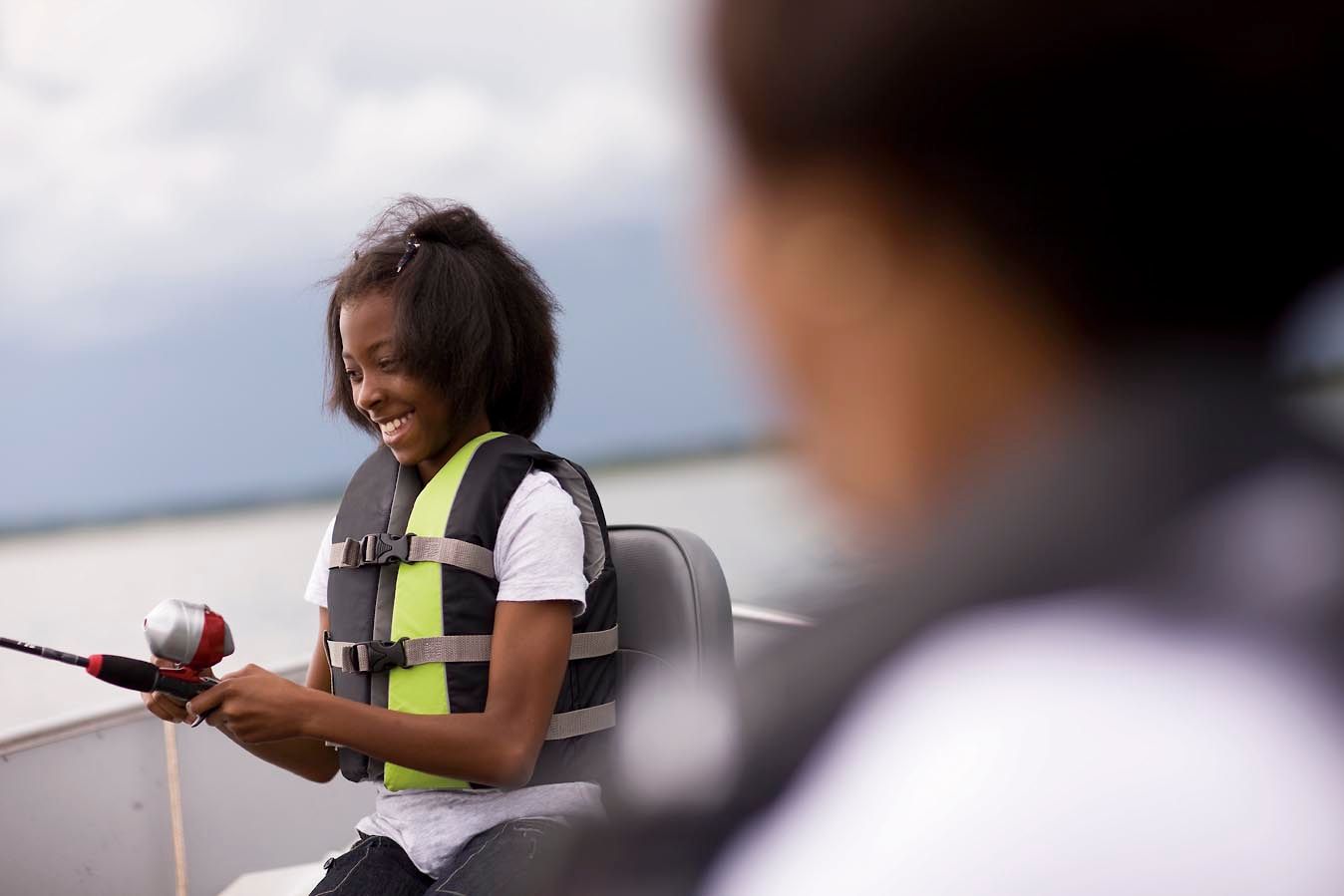
If you prefer calm waters and sunny skies a Level 50 PFD might be for you, but remember these important points. First, unlike some higher-buoyancy PFDs, Level 50 buoyancy aids are generally not designed to turn an unconscious person face-up in the water. While they help keep you afloat, it’s up to you to keep your head above water. For that reason, Level 50 PFDs are recommended only for strong swimmers in protected waters. Boaters should also know that Level 50 PFDs meet federal carriage requirements only when they are worn.
“The intent of the regulation is to allow for more comfortable PFDs, because the life jacket you’re wearing is better than the one you’ve got stuffed in a hatch or tucked under some deck bungees,” says Scott Szczepaniak, Recreational Boating Safety Specialist with the Coast Guard’s 7th District. By adapting a standard that allows companies to make life jackets more comfortable – and also requiring boaters to use them whenever they’re on the water – the Coast Guard, and boaters, get the best of both worlds.
Why the New Standard Matters
Historically, PFDs in the U.S. were categorized as “Type I” through “Type V.” (Those orange horse-collar vests collecting mildew in your cuddy are Type II). The updated standard shifts to numbered performance levels (Level 50, 70, 100, 150, 275), making selection more intuitive and aligning U.S. standards with Canada and other countries. The U.S. Coast Guard (USCG) began rolling in the performance-based system in 2014 and added the Level 50 standard in 2025. The major reason for the change was the desire to offer comfortable, activity-specific PFDs that people are more likely to wear, ultimately reducing drowning and boating fatalities.
Who Are They For?
Level 50 PFDs are buoyancy aids designed for experienced, competent swimmers engaging in specific water activities where mobility and flexibility are priorities. These include:
- Wakeboarding, waterskiing, and other towed watersports
- Personal watercraft
- Kayaking and canoeing on sheltered waters
- Stand-up paddleboarding (SUP) near shore
- Fishing inshore and near-shore waters
- Kayak fishing
- Small-boat sailing
- General boating
Unlike higher-buoyancy PFDs, Level 50 buoyancy aids are designed for active use, giving wearers the range of motion they need to paddle, swim, or manage equipment without being weighed down by bulky foam. They are often lighter and less restrictive than Level 70 or Level 100 jackets, increasing comfort for continuous wear.
However, that comfort comes with conditions: Level 50 buoyancy aids are not recommended for weak swimmers, non-swimmers, or situations where help is far away. These devices do not offer the same degree of protection in rough water or emergencies where the wearer might be unconscious or need to wait extended periods for rescue.

When to Use Level 50 PFDs
One of the biggest changes under the new USCG rules is the way Level 50 devices count toward legal PFD inventory on boats. Level 50 PFDs:
- Must be worn during the activity. You can’t just have them stowed onboard and count them toward your required inventory.
- Are intended for calm, protected waters where rescue is near and the wearer is a strong swimmer.
In short, reach for a Level 50 device when you’re doing active watersports near shore or in areas where you are comfortable and prepared to self-rescue quickly. If conditions become rough, you’re farther from help, or you’re boating in open waters, a higher-level PFD (Level 70 or above) is a better choice.
Final Takeaway
Level 50 buoyancy aids offer a balanced mix of flotation, mobility, and comfort for experienced swimmers and specific water sports. They are not a one-size-fits-all solution but are purpose-built for a variety of boating activities. Always match your life jacket choice to your activity, conditions, and swimming ability, and when in doubt, err on the side of more buoyancy rather than less.
FAQ – Level 50 Life Jackets
In late 2025, the United States Coast Guard adopted a new standard for buoyancy aids with 50 newtons (about 11 pounds) of flotation. This new standard allows manufacturers to produce a new generation of lighter, more comfortable PFDs. Here are some frequently asked questions about Level 50 buoyancy aids.
What Is a Level 50 Life Jacket?
A Level 50 buoyancy aid, sometimes called a Level 50 life jacket, is a lower-profile personal flotation device that meets the U.S. Coast Guard’s new Level 50 standard.
Does a Level 50 life jacket count as my required life jacket on a boat or paddle craft?
Yes, but only if you’re wearing it. Just having one on board doesn’t count.
Who Are Level 50 Life Jackets For?
Level 50 PFDs are recommended for good swimmers in protected waters. Their lower profile allows for greater comfort and freedom of movement than the current Level 70 life jackets.
Can kids wear Level 50 PFDs?
Yes, children can legally use Level 50 buoyancy aids. Like any other person who chooses a Level 50 buoyancy aid, they should be good swimmers in protected waters.
Are Level 50 life jackets available now?
Not in the United States. They are expected to reach U.S. stores in 2027.
Why is it called a Level 50 buoyancy aid?
The name comes from the amount of flotation measured in newtons. A Level 50 PFD has 50 newtons or about 11 pounds of buoyancy. By contrast, Level 70 life jackets have 70 newtons or about 16 pounds of flotation.
Is a Level 50 buoyancy aid as safe as a Level 70 life jacket
The safest life jacket is the one you wear. While a Level 70 life jacket has more buoyancy and is therefore safer in an apples-to-apples comparison, a Level 50 buoyancy aid provides adequate buoyancy for its intended use by good swimmers in protected waters.
What activities are best suited for Level 50 buoyancy aids?
Life jacket manufacturers are designing Level 50 PFDs for a wide variety of boating and water sports activities. You’ll soon be able to buy purpose-built Level 50 devices for motorboating, fishing, kayaking, standup paddleboarding, sailing, PWC riding, wakeboarding and wake surfing, among many more activities.

I Have a 50-newton life jacket from overseas. Do I need to replace it with a U.S. Coast Guard approved Level 50 vest?
Yes. To comply with U.S. carriage requirements you must have a U.S. Coast Guard approved flotation device. There is no such thing as retroactive certifications for life jackets.
Do I need to replace my old Type III life jacket?
If your current life jacket is U.S. Coast Guard approved and in good condition, there is no legal requirement to replace it. If you’re shopping for a new PFD and you’re a good swimmer who values comfort, a Level 50 buoyancy aid may be a good option for you.
Why Does The Level 50 Standard Matter?
The new Level 50 standard is designed to improve PFD comfort. The U.S. Coast Guard believes this will improve wear rates and ultimately save lives.


