
Contributor Blogs, Podcasts & Editorial

How to Rescue an Overboard Boater
What you should do when a crewmember falls overboard. By Boating Magazine My sister brought her boyfriend, my future brother-in-law it turned out, with her on my boat for a day of tubing and adventure. Though I had the best of intentions, when it was his turn on the tube, I might have spun the wheel […]
Read More
Launch a Rental Boat, While on Vacation – Sea Tow Foundation
For most boaters, it wouldn’t be a true vacation without spending some time on the water. Fortunately, taking the helm of a rental boat or being part of a boat club is an easy and often an affordable option for you and your family.
Read More
NSBC BoatBeat Blog: Alcohol and Boating Don’t Mix
Drunken passengers can easily fall overboard, swim near the propeller, lean over the side, or stand up in small vessels, causing vessels to capsize. Sun, wind, boat and wave action intensify the effects of alcohol.
Read More
NSBC BoatBeat Blog: Carriage of Fire Extinguishers
All extinguishers must be Coast Guard approved marine type extinguishers, and have a UL rating of 5-B or higher, which can be found on their label.
Read More
NSBC BoatBeat Blog: The Rules of the Road
The Navigation Rules are much like the rules of the road on the highway. They establish a consistent way to navigate safely and avoid collisions when two boats are crossing paths, are on course to meet head-on, or when one boat wishes to overtake another.
Read More
NSBC BoatBeat Blog: Carbon Monoxide
Exposure to carbon monoxide (CO) in large amounts or even small amounts for a long duration often results in death. CO is an odorless, colorless and tasteless gas in the exhaust produced in gasoline engines.
Read More
NSBC BoatBeat Blog: Search and Rescue Process
If a boater is in distress, they should contact search and rescue assets via VHF-DSC marine band radio, or with an EPIRB or PLB. It is the boater’s responsibility to contact search and rescue assets.
Read More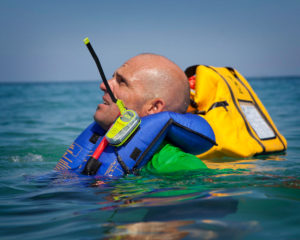
NSBC BoatBeat Blog: EPIRB and PLB
An Emergency Position Indicating Radio Beacon, or EPIRB, is used to alert Search and Rescue forces in the event of an emergency.
Read More
NSBC BoatBeat Blog: Emergency Engine/Propulsion Cut-Off Devices FAQ
Emergency engine/propulsion cut-off devices, sometimes referred to as an engine cut-off switch or kill switch, are a time-proven safety device used to stop the boats engines should the driver unexpectedly fall overboard.
Read More
NSBC BoatBeat Blog: VHF Radio with Digital Selective Calling (DSC)
The VHF radio with DSC is the most common emergency marine communications device, and with good reason: It’s simple to operate, communications go both ways, and when a boater hits the panic button, the U.S. Coast Guard will automatically know who the boater is.
Read More
NSBC BoatBeat Blog: Boating Emergency Preparedness
A boating emergency can happen anytime, anywhere — and does not only refer to a problem with the vessel, but also to any dangerous situation involving a passenger.
Read More
NSBC BoatBeat Blog: Boating Preparedness Recommendations
At a minimum, a boater should make sure that safety and other related equipment are on their vessel and in good working condition before each outing.
Read More
Choosing the Right Life Jacket
No matter what the activity or style chosen, the most important thing is this: Remember to be responsible and always wear your life jacket while boating.
Read More
Life Jacket Facts
Most boaters know they’re required to have a U.S. Coast Guard-approved wearable life jacket on board for every person on their boat. Boating safety advocates recommend that all boaters and passengers not only have a life jacket, but wear it at all times while boating.
Read More
Recreational Boating Safety Facts from the NSBC
All figures are from the U.S. Coast Guard’s 2019 Recreational Boating Safety Statistics, the latest official record of reported recreational boating accidents
Read More
NauticEd Press Kit
NauticEd is recognized as the leading international and fastest-growing North American sailing and boating education company.
Read More
ABYC Press Kit
The American Boat & Yacht Council (ABYC) is a non-profit member organization that develops voluntary global safety standards for the design, construction, maintenance and repair of recreational boats.
Read More
How to Choose the Correct Children’s Life Jacket
Children’s life jackets come in all different sizes and styles, depending on the child’s body weight and comfort in the water. Here are some tips for helping choose what works best for your kids.
Read More